


How to Size a Diptych: Two Panels, One Complete Arrangement
The easy mistake with a diptych is measuring one panel and forgetting that you are buying an arrangement. For two panels hung side by side, total width equals both finished panel widths plus the gap between them. If a size is marked “Each,” it refers to one canvas, not the pair.
That small distinction can change whether a painting fits above a bed or extends beyond a sideboard. It is worth resolving before choosing a frame.
Read the size option literally
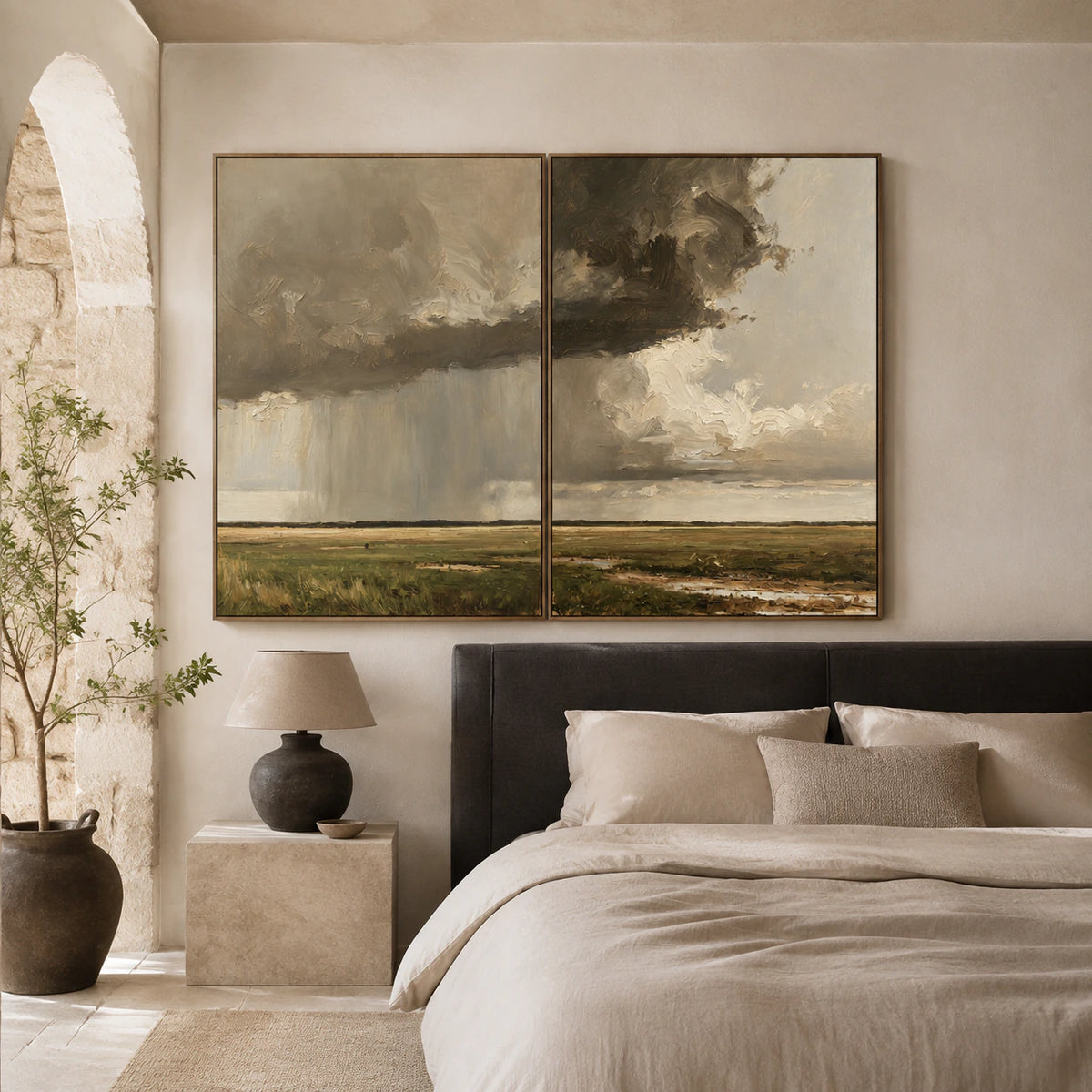
Cloudbreak Meadow, for example, is offered as a two-panel work. An option reading “2P 24 × 30 in (Each 24 × 30)” means two canvases, each 24 inches wide and 30 inches high. Side by side, the canvas widths alone add up to 48 inches.
With an illustrative 2-inch gap, the unframed arrangement would span 50 inches, or approximately 127 cm. Its height would remain 30 inches, approximately 76 cm. An outer frame can increase both dimensions, so use the final outside measurements supplied for your chosen finish.
A worked example you can use at home
For a pair with equal finished widths, the calculation is simple:
Full width = (finished width of one panel × 2) + gap.
- Two 24-inch-wide panels + a 2-inch gap = 50 inches overall.
- Two 30-inch-wide panels + a 2-inch gap = 62 inches overall.
- Two 36-inch-wide panels + a 2-inch gap = 74 inches overall.
These examples assume the stated widths are the finished outside widths. If they are canvas widths, add the confirmed frame allowance first. The 2-inch gap is an example for planning, not a required spacing or a promise that every composition will look best that way.
Above a bed: include the headboard and the lighting
Measure the outside width of the headboard rather than relying only on the mattress size. Bed frames can extend beyond the mattress, and wall lights can reduce the clear space available for art.
Mark two paper rectangles on the wall at the proposed size, with a separate strip representing the gap. Stand in the doorway and look at the relationship between the pair, the headboard and both lights. If the arrangement feels squeezed, try a smaller pair before reducing the gap to almost nothing.
Above a sideboard: center the pair as a whole
The center of a symmetrical two-panel arrangement lies in the gap. When the sideboard is the main anchor, begin by aligning that midpoint with the furniture. Then assess the room: a nearby doorway, a tall lamp or an off-center architectural feature may make a slight adjustment feel better.
For Cloudbreak Meadow, the cloud forms and low horizon connect the canvases visually. Keep the intended panel order and aligned edges unless the studio advises otherwise. Separating the panels onto unrelated walls would change how that landscape reads.
How far apart should the panels hang?
There is no single gap that suits every diptych. Try a modest separation in your paper layout, then assess whether the work still reads as one composition. A narrow gap emphasizes continuity; a wider one makes the two panels more independent. Confirm the intended arrangement if you are unsure.
Once the sizes feel right, ask for the finished dimensions and hanging requirements before arranging installation. Use fixings matched to each panel’s weight and your wall construction.
Browse vertical diptychs, or send your wall width, furniture width and preferred work to VALLORNE. Including a straight-on room photo makes the proportions easier to discuss.